
Social Selling
Oct 29, 2026
What Is Social Selling? A Step-by-Step Guide for B2B Teams
We walk through the social selling process from researching prospects to the first meeting, with practical examples for B2B sales teams.
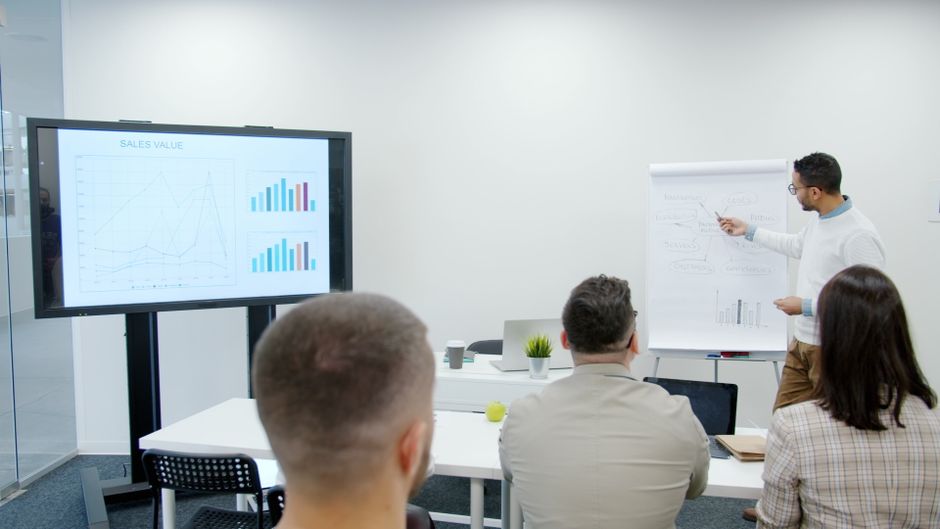
Social selling is the practice of sales teams using social platforms like LinkedIn and Instagram to find prospects, build relationships with them and, over time, turn those relationships into sales conversations. Unlike cold calling or mass email, social selling puts value first and builds trust, and the sales conversation happens only when the other side is ready. Because B2B purchasing decisions take a long time and involve multiple people, this approach is one of the most effective ways to establish an early presence in decision-makers' minds.
Many B2B companies sum up social selling as "sales reps being more active on LinkedIn." In reality, a social selling program that works is a repeatable process that spans everything from defining your target customer and optimizing profiles to creating content, messaging and measurement. In this post, we explain what social selling is, what it isn't, and how B2B teams can build the process step by step, with concrete examples.
What exactly is social selling, and what isn't it?
The easiest way to understand social selling is to distinguish it from the concepts it's often confused with.
Social selling is:
- Following your target customers' posts, company news and interests on social platforms
- Building a reputation for expertise by sharing useful, industry-relevant content
- Staying visible by leaving meaningful comments on prospects' posts
- Starting a dialogue with personalized, context-appropriate messages after connecting
- Moving that relationship toward a discovery call or demo over time
Social selling is not:
- Sending a product brochure the moment a connection request is accepted
- Copy-pasting the same template message to hundreds of people
- Simply running ads from your company page
- Turning a sales rep's personal profile into a corporate announcement board
In short, social selling isn't about "connecting in order to sell"; it's built on the idea that "sales opportunities emerge as you build connections." LinkedIn's own Social Selling Index (SSI) defines this approach under four pillars: establishing a professional brand, finding the right people, engaging with insights and building relationships. The steps below are largely shaped around these four pillars.
Why should B2B teams invest in social selling?
The B2B buying process is fundamentally different from B2C. When a company buys software, consulting services or an industrial solution, you'll typically encounter the following:
- Multiple people are involved in the decision: the user, the department manager, procurement, finance and sometimes senior leadership.
- Buyers complete much of their own research before ever talking to a sales rep.
- Trust matters as much as price; the question "do these people know what they're doing?" comes up constantly.
- The sales cycle can last weeks or even months.
This is exactly the environment where social selling creates value. If, while researching, the buyer comes across a useful post of yours, a comment of yours that a colleague liked, or a post that clearly analyzes an industry problem, you go into the first meeting not as "an unfamiliar salesperson" but as "an expert they follow." In other words, a cold contact becomes a warm one.
Another advantage is being able to reach multiple decision-makers at once. You can connect separately with the marketing manager, sales director and general manager at a target company and offer each of them content and messages tailored to their priorities.
The step-by-step social selling process
The nine steps below form a framework that a B2B team building a social selling program from scratch can follow. Although the steps appear sequential, in practice the process becomes cyclical from step 4 onward.
1. Clarify your goal and ideal customer profile
Teams that start social selling with a "let's reach everyone" mindset quickly lose focus. The first task is to define in writing who you're selling to.
Answer these questions for your ideal customer profile (ICP):
- Companies in which industries are your best customers?
- What is their company size (headcount, revenue range)?
- In which geographies do they operate?
- Who makes the purchasing decision, and who influences it?
- What is these people's biggest business problem?
Example: For a company selling HR software, the ICP might be: "Manufacturing and retail companies operating in Türkiye with 200–1,000 employees; the decision-maker is the HR director, influencers are the payroll specialist and finance manager; the core problem is leave and performance processes managed through scattered Excel files."
Then set a measurable goal. Instead of "more sales," a clear target such as "15 discovery calls sourced from social selling in the first 90 days" makes the process manageable.
2. Turn your sales team's profiles into storefronts
When a prospect sees your connection request or comment, the first thing they do is look at your profile. If your profile still just says "Sales Representative @ Company X," you've lost the opportunity before it even begins.
An effective sales profile:
- Uses the headline to state who you help and how instead of just your job title (e.g., "I help manufacturing companies digitize their HR processes").
- Uses the About section to describe the customer's problem, your approach and the next step.
- Features a professional photo and a cover image consistent with the corporate identity.
- Showcases case studies, webinar recordings or useful guides in the Featured section.
In our guide to optimizing your LinkedIn sales profile, where we cover this topic in detail, you'll find plenty of examples, from headline formulas to About section templates.
Practical tip: Update the entire sales team's profiles in one go using a shared template. That way, when someone at a target company looks at the profiles of two people on your team, they see a consistent brand image.
3. Build your target account and contact lists
Once your ICP is clear, you need to list the companies that fit this profile and the right people within them. Thinking in two layers makes this easier:
- Account list: 50–200 companies that fit your ICP. Keeping it small is better at the start.
- Contact list: 2–4 people from each company (decision-maker + influencers).
LinkedIn's advanced search filters, Sales Navigator and various B2B data tools are used at this stage. For example, platforms like Apollo.io make it easier to build lists by filtering company and contact data and to export those lists to your CRM. If you're trying to decide on Sales Navigator's cost and alternatives, our post on LinkedIn Sales Navigator pricing and alternatives is a good place to start.
If you'd rather work with data-driven target lists than build them in-house, our sister company Sales Corner's data-driven B2B sales and lead generation service can take this stage off your hands.
Sample list structure:
- Company name, industry, headcount, city
- Contact name, job title, LinkedIn profile link
- Priority level (A/B/C)
- Date and type of last interaction
- Notes (e.g., "Posted about opening a new factory last month")
4. Listen: track trigger events
Listening is the most underrated step in social selling. When you follow the people on your target list, natural opportunities to start a conversation emerge. These are called trigger events:
- Starting a new role or getting promoted
- The company raising investment or opening a new office or facility
- Heavy hiring for specific positions in job postings
- The person posting a complaint or question about an industry problem
- Speaking at an event or winning an award
Example: If the HR director of a logistics company on your target list posts, "We'll be hiring 150 new drivers this year," that's the perfect context for opening a conversation about recruitment and onboarding processes.
In practice, all you need to do is follow your target contacts on LinkedIn, create saved lead lists in Sales Navigator and turn on notifications for company pages. A 10–15 minute scan each day will help you catch several meaningful opportunities a week.
5. Create value with content
In social selling, content is the sales rep's "voice." When reps post regularly and share useful content, their connection requests are accepted more easily and their messages get more replies.
A sustainable content mix for a sales team might look like this:
- 1 expertise post per week: An answer to a question customers frequently ask, or a take that corrects a common industry misconception.
- 1 experience post per week: A lesson learned from a customer meeting (without naming names), or an observation from the field.
- 1 share or reinterpretation per week: Sharing a post from the company blog with your own perspective.
Two to three posts a week is a realistic rhythm for most sales reps. What matters more than frequency is consistency and quality.
Having the marketing team prepare a content pool makes a big difference, so the sales team doesn't have to come up with content from scratch every time. We've laid out a step-by-step framework for setting up this pool in our guide to building a B2B content strategy.
6. Engage first, then send a connection request
Becoming visible first, instead of sending a connection request right away, noticeably increases your acceptance rate. Here's the recommended sequence:
- Follow the target contact.
- For 1–2 weeks, leave meaningful comments on their posts (not "Great post!" but 2–3 sentence comments that add to the content).
- Once your name has appeared in their notifications a few times, send a connection request with a personal note.
Weak comment example: "So true, congrats."
Strong comment example: "The first week of onboarding is really critical for shift-based teams. Among the manufacturing companies we work with, those that tie the first week to a digital checklist see faster adaptation on the floor. Do you plan onboarding by shift?"
The second comment both demonstrates expertise and starts a conversation. If the person replies to this comment, your connection request will most likely be accepted.
7. Start the conversation with a personalized message
The first message after your connection is accepted is the most critical moment in social selling. The most common mistake here is launching straight into a product pitch.
A good first message:
- References a shared context (a comment, post, event or trigger event).
- Is short and easy to read; it fits on a single mobile screen.
- Contains a question or value offer instead of a sales ask.
- Makes it easy for the other person to say "no."
Sample message:
"Hi Ayşe, thanks for accepting my connection request. I saw your post about hiring 150 new drivers. We put together a short checklist on how companies hiring at a similar scale manage onboarding; I'd be happy to share it if it would be useful. Right now, which part is most challenging for you: the paperwork or the training planning?"
There's no sales pitch in this message, but the door is open for the next step. For more templates and scenarios, take a look at our examples of writing cold sales messages on LinkedIn.
Follow-up rule: If you don't get a reply, send a single follow-up message 5–7 days later that offers something new of value (e.g., a relevant article or a brief insight). If there's still no reply after the second follow-up, stop messaging and continue to stay visible through content and comments.
8. Move the conversation to a meeting and log it in your CRM
When the other person starts answering your questions and showing interest, it's time to suggest a meeting. Here too, the language of the offer should be soft:
"Based on what you've described, it might be helpful to share how two of our customers who went through a similar process approached it. How about a short 20-minute call next week? If that doesn't work, I can also send you a written summary."
Logging every interaction in your CRM turns social selling from a personal habit into an organizational process. At a minimum, track the following fields in your CRM:
- Lead source: a separate tag such as "Social selling - LinkedIn"
- Date and type of first contact (comment, connection, message)
- Stage: Followed → Engaged → Connected → In conversation → Meeting → Opportunity
- Owner (responsible rep)
This staging lets you see at which step you're losing prospects. For example, if your connection acceptance rate is high but your conversation rate is low, the problem most likely lies in your first message.
9. Measure, learn and improve
The most common criticism of social selling is the belief that it's "unmeasurable." In fact, when tracked with the right metrics, it's a highly transparent channel.
Activity metrics (weekly):
- Number of meaningful comments made
- Connection requests sent and acceptance rate
- Number of conversations started and reply rate
- Number of posts published
Outcome metrics (monthly/quarterly):
- Number of meetings sourced from social selling
- Number of opportunities and pipeline value generated from these meetings
- Closed deals and average sales cycle length
- Change in LinkedIn SSI score
We cover the calculation methods you can use to compare the ROI of social selling with other channels in detail in our guide to measuring B2B social media ROI.
How should social selling be organized within the team?
Social selling isn't solely the sales team's responsibility. The best results come from setups where marketing and sales work together.
Marketing team's role:
- Preparing a content pool the sales team can share
- Creating profile templates, cover images and a tone-of-voice guide
- Producing company page content in a format reps can reshare
- Handling monthly reporting and content performance analysis
Sales team's role:
- Maintaining a daily routine of listening, commenting and messaging
- Passing questions and objections from the field to marketing (these make the best content ideas)
- Keeping CRM records up to date
Leadership's role:
- Openly supporting time spent on social selling
- Having senior executives post regularly from their own personal profiles as well
- Setting outcome-focused goals rather than activity-focused ones
When employees outside the sales team also share company content, reach expands significantly. If you're wondering how to set up such a program, our post on employee advocacy programs on LinkedIn will show you the way.
What does a weekly social selling routine look like for a sales rep?
Sustainability is the most decisive factor in social selling success. The routine below can be followed by setting aside about 30 minutes a day:
Every day (about 30 minutes):
- 10 minutes: Scan your main feed and saved lead lists, and note any trigger events.
- 10 minutes: Leave 3–5 meaningful comments on posts by people on your target list.
- 10 minutes: Reply to incoming messages and send 2–3 new personalized messages.
Weekly:
- Monday: Publish the week's expertise post.
- Wednesday: Publish an experience or field observation post.
- Friday: Share company content with your own commentary, and check your weekly metrics in the CRM.
- Throughout the week: Send a total of 15–25 personalized connection requests.
Monthly:
- Review your target account list, move unresponsive contacts to C priority and add new accounts.
- Together with the marketing team, review the posts that got the most engagement and the messages that got the most replies.
Although this routine may seem to reach fewer people than a mass-messaging approach, the quality of the relationship you build with each person is far higher.
Does Instagram have a place in B2B social selling?
While LinkedIn is the main stage for B2B social selling, leaving Instagram out entirely isn't the right call for every industry. Instagram can play a supporting role, particularly in the following areas:
- Visually driven industries: Architecture, interior design, industrial products, packaging, events and tourism services
- Founder- or executive-led small and medium-sized businesses: Segments where decision-makers are more active on Instagram than on LinkedIn
- Brand trust and company culture: Content about the team, the production process and behind the scenes
Social selling on Instagram isn't as direct as on LinkedIn; it mainly lays the groundwork for brand awareness, trust and warm contact. Story replies and direct messages can turn into conversations when handled well. In short, Instagram should be seen as a second touchpoint that complements your social selling efforts on LinkedIn.
What are the most common social selling mistakes?
These are the mistakes we encounter most often in the field:
- Selling as soon as a connection is accepted: Also known as "pitch slapping," this approach ends the relationship before it even begins.
- Overusing automation: Mass messaging and auto-connect tools may generate volume in the short term, but they can violate platform rules and damage your brand's reputation.
- Working inconsistently: Two weeks of intense activity followed by a month of silence. Both the algorithm and people reward consistency.
- Neglecting the profile: A perfect message loses its impact because of a weak profile.
- Not measuring: You can't improve the process without knowing which messages and which content work.
- Focusing only on the decision-maker: In B2B, influencers shape the decision at least as much as the decision-maker does.
- Sales and marketing working in silos: The sales team can't find content, and marketing doesn't know the real questions coming from the field.
When do you see results from social selling?
Social selling isn't a campaign that delivers quick results; it's a cumulative investment. To sketch out a general timeline:
- First 30 days: Profiles are updated, target lists are built and the routine settles in. You start to see increases in connection acceptance rates and profile views.
- 30–90 days: The first meaningful conversations and discovery calls come in. It becomes clear which messages and content work.
- 90 days and beyond: A steady flow of opportunities into the pipeline begins; your posts gain recognition among your target audience and inbound messages increase.
In industries with long sales cycles, it's normal for the first closed deals to take 6 months or more. That's why it's healthier to focus on activity and conversation metrics in the first quarter, and on pipeline and revenue metrics in subsequent quarters.
For SaaS companies looking to run social selling in a multichannel setup alongside channels like outbound email and phone, our sister company SAAS Corner's outbound sales and lead generation service tailored to B2B SaaS offers a complementary option.
Frequently asked questions
What's the difference between social selling and LinkedIn advertising?
LinkedIn advertising is when a company allocates budget to show paid content to a specific target audience, and it's usually run through the company page. Social selling, on the other hand, is when sales reps build relationships through their personal profiles via organic engagement and one-to-one communication. The two aren't alternatives but complements; advertising creates awareness, while social selling turns that awareness into personal relationships.
Do you need Sales Navigator for social selling?
It's not essential at the start; you can do social selling with LinkedIn's free search features and consistent follow-up. However, as the number of target accounts grows, advanced filters, saved lead lists and account-based notifications save a significant amount of time. A sensible approach is to establish the process with free tools first, then move to paid tools once the need to scale arises.
How much time should a sales rep spend on social selling each day?
For most B2B sales teams, 20–40 minutes a day is a sufficient and sustainable range. This time should be split between listening, commenting and messaging. What matters is building a short, consistent daily routine rather than long but irregular sessions.
Which B2B companies is social selling not a good fit for?
In some traditional industries where the target audience is barely active on social platforms, for example where decision-makers make very limited use of digital channels, the impact of social selling may be limited. However, this is becoming less common; even if decision-makers don't post themselves, they use LinkedIn for research. That's why, for most B2B companies, social selling is worth considering at least as a supporting channel.
Conclusion
Social selling is a systematic approach that enables B2B teams to reach prospects without applying sales pressure, by offering value and building trust. Success comes from combining a clear ideal customer profile, optimized sales profiles, well-structured target lists, a regular content and engagement routine, personalized messages and consistent measurement. When you treat these steps not as a one-off campaign but as an ongoing process jointly owned by your sales and marketing teams, social platforms become one of the most reliable sources of your pipeline.
If you'd like to build a social selling program for your sales team from scratch, set up your profile and content infrastructure, or make your existing efforts measurable, we at Social Media Corner would be happy to help. Get in touch to discuss your needs.
Related Posts
- How to Optimize Your LinkedIn Sales Profile
- LinkedIn Sales Navigator Pricing and Alternatives
- How to Write a LinkedIn Cold Sales Message: Examples
- How to Build a B2B Hashtag Strategy on Instagram
Our Services
Latest Posts




Grow Your Social Media with Social Media Corner
Explore a dynamic user experience design project infused with financial management, investments, and profit-driven strategies. Dive into our elegantly crafted website, designed to empower users to invest intelligently with AI assistance.
87 %
reduction in hiring costs
Berkay YALÇIN
CEO

91 %
Retention rate
Social Media Corner Team